
Background to SSS
Technology Objectives
Many industries consume large amounts of caustic soda and sulphuric acid, while producing sodium sulphate containing waste streams. Other industries, perhaps most, opt to use lime as a causticizing agent due to lower cost and produce gypsum as a waste material.

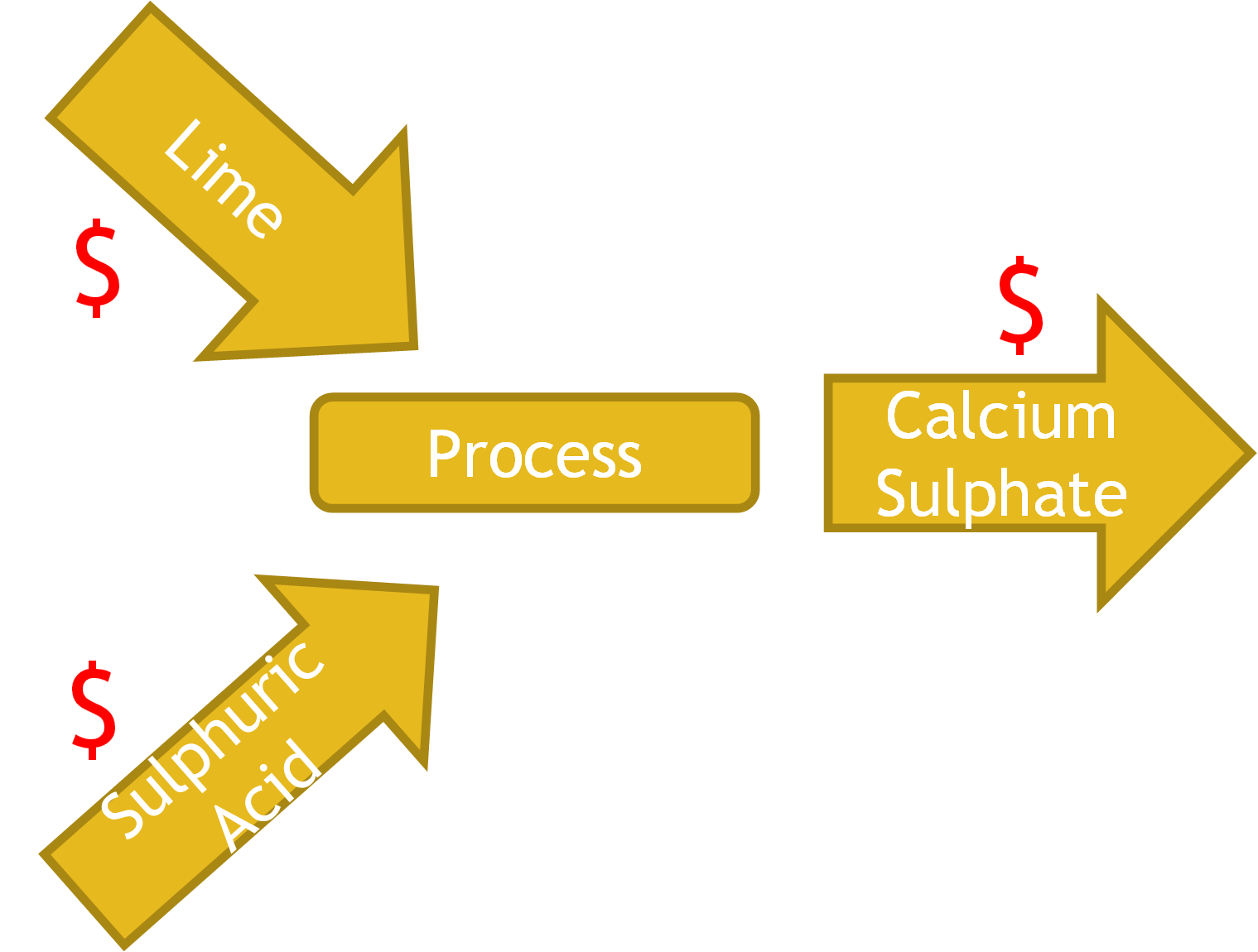
Typical current practices
In most instances, the use of caustic soda as a process material is preferred due to its ease of handling, its process efficiencies (due to high solubility of sodium compounds) and other benefits. The drawback of caustic soda is its high cost, and hence many industries default to the use of lime. Caustic soda also (often) produces sodium sulphate as waste stream, a chemical with low (if any) value.
Prodromos Technologies have invented a process that takes sodium sulphate as feedstock and converts it to caustic soda and sulphuric acid. We refer to this process as the Sodium Sulphate Splitting Process, or simply SSS.
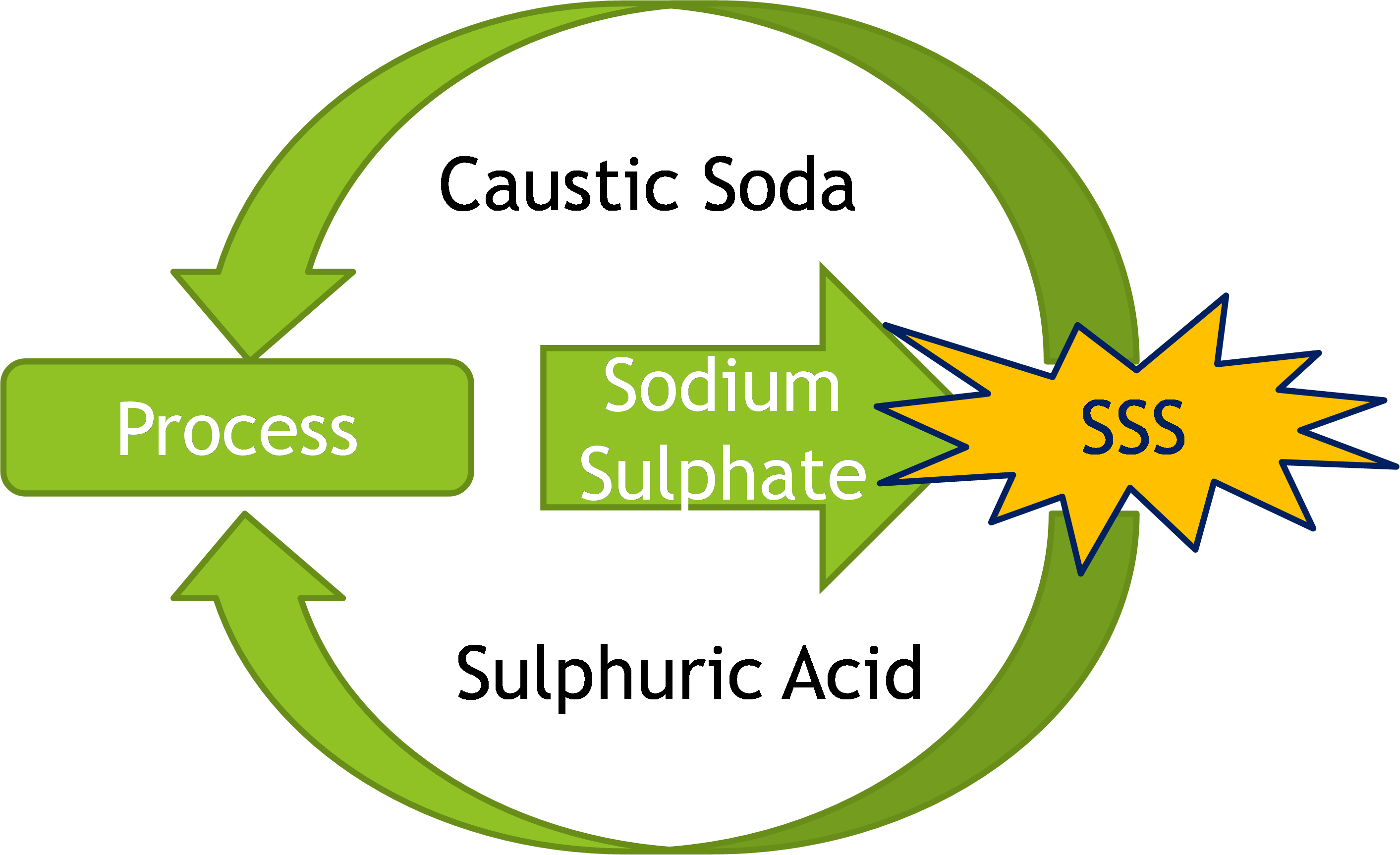
The Essence of the SSS Technology
The application of this technology will enable cost-effective conversion from lime to caustic soda while improving process efficiency and eliminating waste, and at the same time contribute to reduced carbon emissions.
Where waste sodium sulphate is produced, this technology will convert this salt to caustic soda and sulphuric acid, thereby reducing purchasing cost of input chemicals and reducing the reliance on suppliers.
The objective of the technology is to generate caustic soda and sulphuric acid (or sulphur, if so desired) from an in-feed of sodium sulphate. It presents the potential of creating a true circular economy
Compatibility with the UN Sustainable Development Goals
The SSS technology supports the Sustainable Development Goals promulgated by the United Nations. The following table highlights some of the more relevant aspects.
| SDG | Sub-objectives | Notes |
| Goal 6: Ensure availability and sustainable management of water and sanitation for all | • 6.1 By 2030, achieve universal and equitable access to safe and affordable drinking water for all • 6.3 By 2030, improve water quality by reducing pollution, eliminating dumping and minimizing release of hazardous chemicals and materials, halving the proportion of untreated wastewater and substantially increasing recycling and safe reuse globally • 6.4 By 2030, substantially increase water use efficiency across all sectors and ensure sustainable withdrawals and supply of freshwater to address water scarcity and substantially reduce the number of people suffering from water scarcity • 6.6 By 2030, protect and restore water-related ecosystems, including mountains, forests, wetlands, rivers, aquifers and lakes • 6.a By 2030, expand international cooperation and capacity-building support to developing countries in water- and sanitation-related activities and programmes, including water harvesting, desalination, water efficiency, wastewater treatment, recycling and reuse technologies | The SSS technology makes it possible to cost-effectively treat sulphate containing mining and industrial wastewaters, thus preventing discharge of polluting chemical compounds into water bodies. Such treatment will also enable higher levels of water reuse, thereby improving water efficiency. |
| Goal 7: Ensure access to affordable, reliable, sustainable and modern energy for all | • 7.a By 2030, enhance international cooperation to facilitate access to clean energy research and technology, including renewable energy, energy efficiency and advanced and cleaner fossil-fuel technology, and promote investment in energy infrastructure and clean energy technology. | The SSS technology will make cost-effective and efficient flue gas desulphurisation possible, thereby improving the environmental friendliness of power generation from fossil fuels. |
| Goal 8: Promote sustained, inclusive and sustainable economic growth, full and productive employment and decent work for all | • 8.4 Improve progressively, through 2030, global resource efficiency in consumption and production and endeavour to decouple economic growth from environmental degradation, in accordance with the 10-Year Framework of Programmes on Sustainable Consumption and Production, with developed countries taking the lead | The SSS technology improves the resource efficiency by reducing the consumption of chemicals and reclaiming such from discharge streams. This contributes to economic growth without concomitant environmental degradation. |
| Goal 9: Build resilient infrastructure, promote inclusive and sustainable industrialization and foster innovation | • 9.4 By 2030, upgrade infrastructure and retrofit industries to make them sustainable, with increased resource-use efficiency and greater adoption of clean and environmentally sound technologies and industrial processes, with all countries taking action in accordance with their respective capabilities | The SSS technology’s prime objective is to increase resource-efficiency through recovery of discharged chemicals. This in essence renders it a cleaner production technology. |
| Goal 12: Ensure sustainable consumption and production patterns | • 12.2 By 2030, achieve the sustainable management and efficient use of natural resources • 12.4 By 2030, achieve the environmentally sound management of chemicals and all wastes throughout their life cycle, in accordance with agreed international frameworks, and significantly reduce their release to air, water and soil in order to minimize their adverse impacts on human health and the environment • `12.5 By 2030, substantially reduce waste generation through prevention, reduction, recycling and reuse | The SSS technology will reduce the dependence on mined chemicals, such as limestone. It further facilitates the environmentally sound management of chemicals and wastes through their life-cycle, principally through the prevention, reduction and reuse made possible through its application. |
| Goal 13: Take urgent action to combat climate change and its impacts | The SSS technology will reduce the need to use large amounts of lime and limestone. Lime is prepared from limestone through calcination, therefore causing significant generation of carbon dioxide. The technology itself is developed to use hydrogen as a regeneration agent, as opposed to carbon or carbon derived gas, specifically with the aim to minimise the carbon footprint. | |
| Goal 15: Protect, restore and promote sustainable use of terrestrial ecosystems, sustainably manage forests, combat desertification, and halt and reverse land degradation and halt biodiversity loss | • Take urgent and significant action to reduce the degradation of natural habitats, halt the loss of biodiversity and, by 2020,forests, combat desertification, and halt and reverse land degradation and halt biodiversity loss | The SSS technology will make it possible to cost-effectively treat high sulphate containing wastewaters, such as AMD. The uncontrolled release of AMD into rivers has caused some of these rivers to lose all life, and as such impacts on biodiversity. |